Announcements
Companion to Irish Traditional Music, 3rd edition
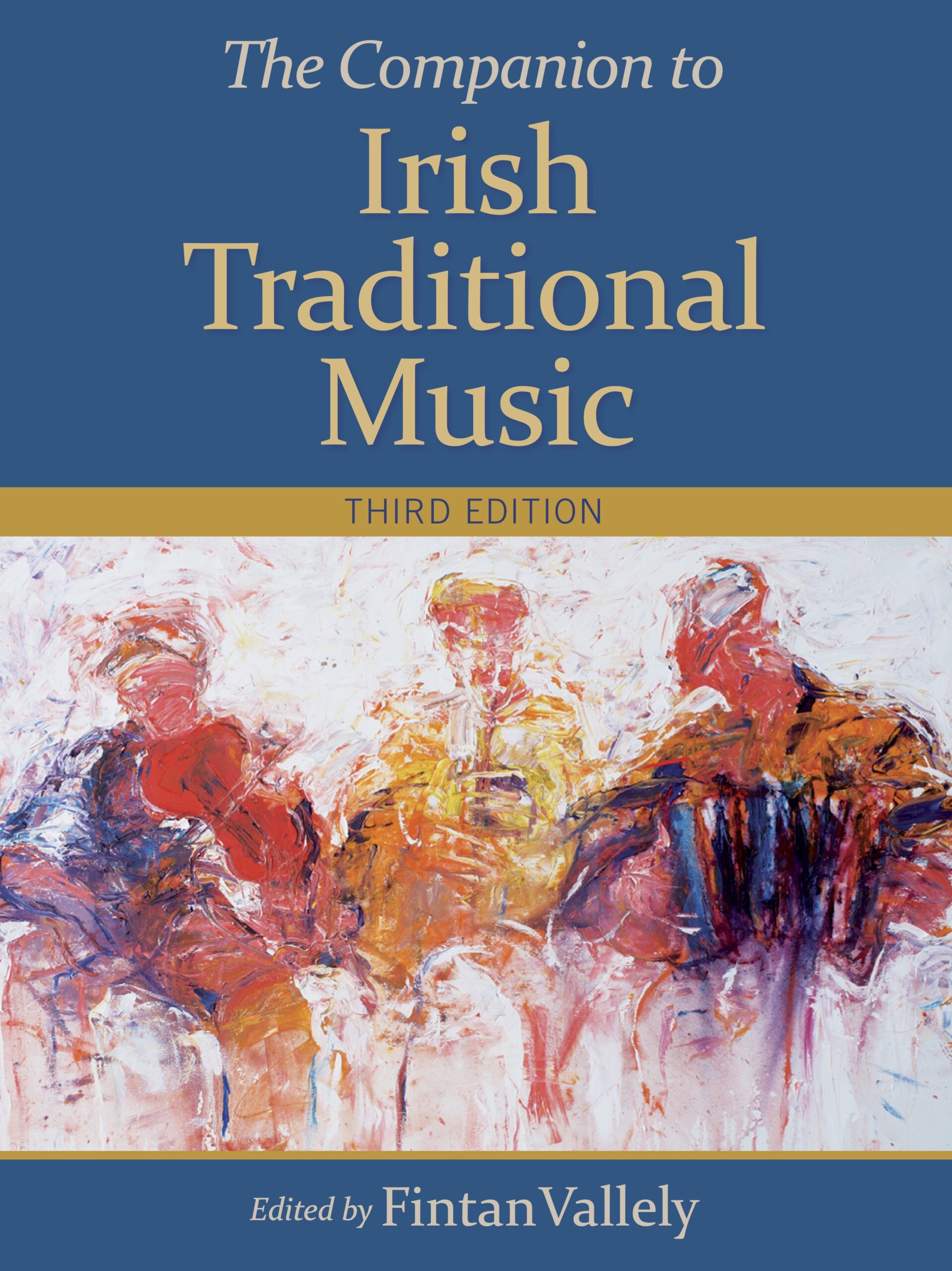
LAUNCH IN MAY, 2024. The ultimate reference for all players, devotees and students of Irish music, an indispensable guide to Ireland’s internationally-celebrated and performed traditional music, song and dance. A comprehensive body of information, it has an unparalleled broad historical and contemporary, geographic and social, coverage that is relevant to organisers, teachers and students of the music alike. This makes it also a productive foundation for further aesthetic and sociological investigation within not only Irish music, but the now-international cultural field of Irish Studies.A vital source-book, the Companion is now substantially revised, expanded and re-focused on modern-day issues and practices—the most extensive collection to date of such diverse data. It brings together the knowledge of 217 contributors in an A—Z format with c. 600,000 words, 190 images, 90 music transcriptions and 1800 entries…
Read MoreBeating Time – The Story of the Irish Bodhrán
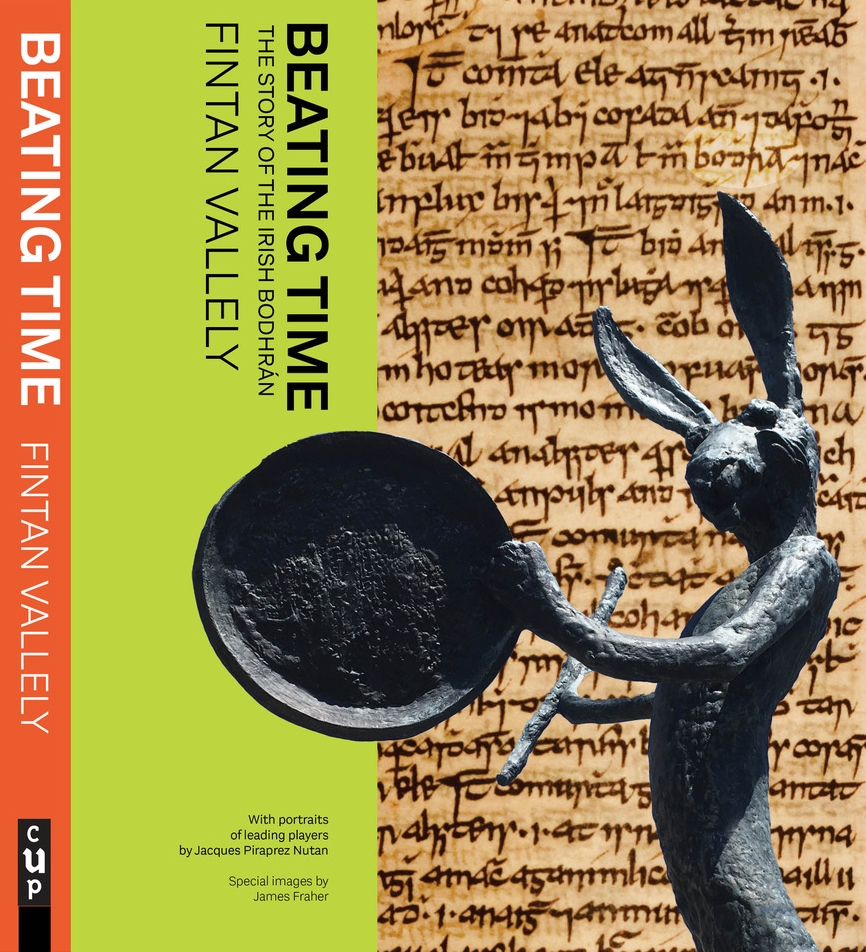
A unique, newly-researched, full history of the tambourine and bodhrán in Ireland.
The bodhrán drum has become a symbol of Ireland, as well known by now as the classic harp. Remarkably, it became visible only in the mid-1900s, but rapidly achieved a tremendous popularity. It is typically assumed to be the ancient, Irish percussion, but investigation of museum objects, images, fiction and history, newspaper reports, advertising and folklore shows that there is no historic, percussion dimension to Irish music at all: it is demonstrably melodic. There was, however, since the ancient past, a well-documented (but now defunct) device called bodhrán that was a subsistence-era, household container and winnowing tool that came to be improvised as a drum on rituals like the Wren each winter. But in the mid-1700s the European tambourine was introduced to Ireland by the music trade and popular stage-shows, was copied by rural artisan sieve-makers, and took over as the Wren’s symbolic percussion. Development of the Wren as a cultural festival in the 1950s led not only to the tambourine being adopted into revived Traditional music, but to the old term ‘bodhrán’ being reclaimed to describe it, a re-branding that took hold after 1960. Today the bodhrán has been hugely developed through interaction between the expanding expertise of its most virtuosic players and the innovations of its makers in Ireland and abroad, and is played widely in not only traditional Irish music, but in other genres as well. All of this marks the bodhran as not the oldest Irish-music instrument, but the newest, in such recent time that, remarkably, most of those who created its styles and forms are still part of today’s Irish music scene.
Read MoreTG4 2023 Gradam Saol / Lifetime Achievement Award
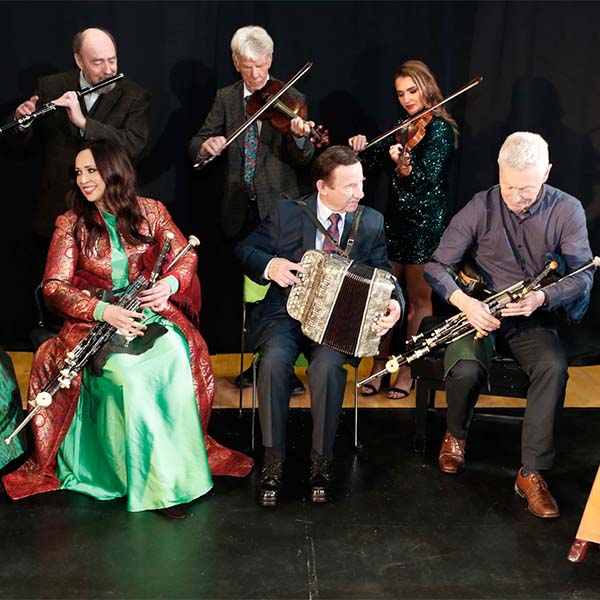
Fintan Vallely is the recipient of this year’s TG4 Gradam Saol award. This is in recognition of his writing, teaching and performance work over the years since the early 1960s. The award was presented at a night of music in the University of Limerick Concert Hall on Sunday, April 23rd, 2023. The concert was broadcast live on television at 9.30pm. Now in its 26th year, the Gradam Ceoil has been dubbed ‘the Oscars of traditional music’, and pays homage to musicians who have advanced, strengthened, and preserved traditional music in Ireland.
Read MoreTuras – Éire Fhíorúil sa Cheoil / Virtual Ireland in Music
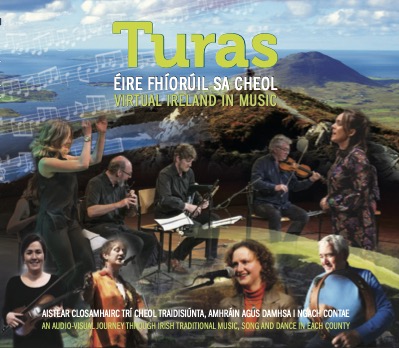
This DVD and movie is a Covid-era response to the absence of live performance. It is a TV-style documentary of still images with music, linked sequentially in Traditional tunes named for each county on the island of Ireland and its Diaspora regions of England and the USA. The imagery and music embody hundreds of the key elements with which Irish music engages, as found among the data in the encyclopedia Companion to Irish Traditional Music . These are presented as a county-by-county, old and new, tunes/song repertoire linked to places by visual images.
The music is played by Fintan Vallely, Gerry O’Connor and Tiarnán Ó Duinnchinn – a 100-minute performance, with sean-nós and Irish-language song by Máire Ní Choilm, Róisín Chambers and Karan Casey, and ballads in English by Karan, by Stépahie Makem, Maurice Leyden and Róisín White. Sean-nós step dance by Sibéal Davitt powerfully accents the music with percussive rhythm, as does 19th-century tambourine played, and made, by bodhrán pioneer Seamus O’Kane.
Read MoreThe Humours of Cocoon – 4 decades of music and writing under the one roof
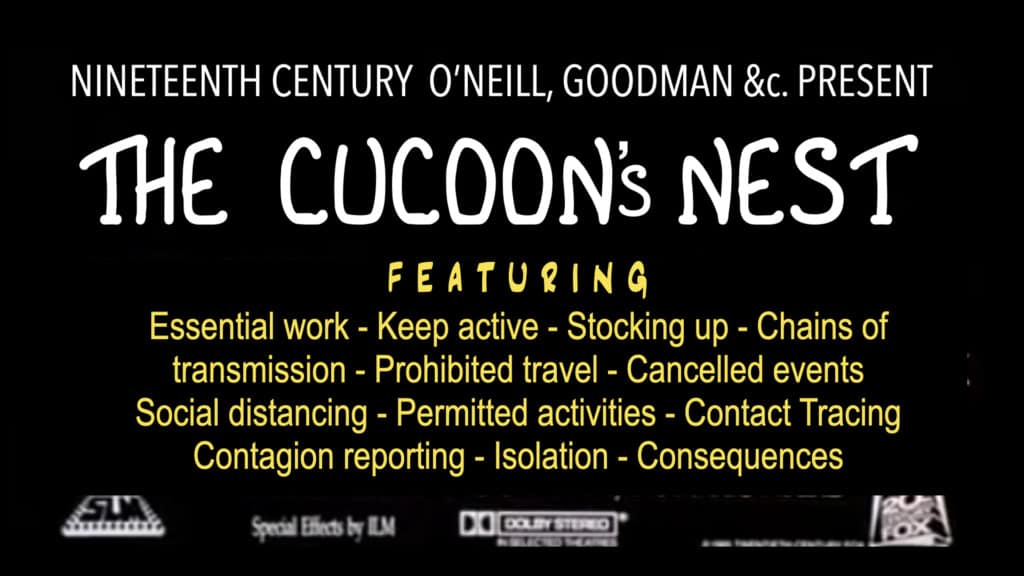
Topical tunes to while away the quarantine with sanguinity. Forty years ago on ‘dry’ Good Friday this small house in Dublin was christened with music and a party that was provisioned with alcohols from under the counter by the legendary Bertie McCormack’s Rathmines grocery shop. Since it was from before the age of photographic incontinence, no pictures are known to exist. These days, cameras are as numerous as flies, but in vastly greater measure is the worry and fear around what is now so terrible to think about; there is too much time to contemplate, but little that can be done in the short term other than try to stay calm. With such distraction, commemoration of the forty-odd books and albums that have come out of the house since, and of the wonderful journalists, musicians, writers and painters who have passed through it (many to eternity) is not an option, and it is hard to stay focused on one’s everyday mission.
Read MoreRelease of Companion as an eBook
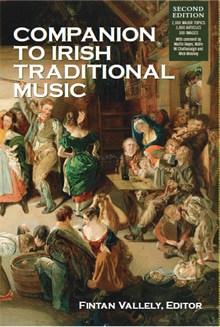
The Companion to Irish Traditional Music is now available in digital formats. On February 1st 2013 it was released as an ebook on Kindle and on iBooks. It is also available to libraries on-line through the Project Muse UPCC collection, as part of a greater collection, or, later in 2013 as an individual title; libraries can also get access from CHOICE website by subscription.
This is a landmark for a reference publication dedicated to Irish music, and opens up a huge new potential for the encyclopedia’s use in education in particular. The online formats make it possible for schools and colleges to economically manage productive access to the book’s huge volume of data: searches for places, names, music or instrument references, quoting information or gathering together linked but diffuse information on such as dance or song – as part of project and music programme research.
Each of these digital versions also has the terrific ability to not only find a term or name within the book itself, but will also do a search on the web for the same term. A wonderful way to save time and to broaden knowledge, this ties the data from the book into the huge resources on the internet.This revolutionises the Companion’s potential, making it a highly convenient, valuable, everyday resource for any musician, music lover, music student or researcher.
Read MorePrestige ranking for Companion
The Companion to Irish Traditional Music has been ranked 11th in a shortlist of 644 ‘Outstanding Academic Titles’ (OAT) chosen by a key US librarians’ resource, Choice Reviews Online. The shortlist was selected from a total of c. 7,000 academic reviews of books in all subject areas which were themselves chosen by Choice Reviews for critical comment during 2012 out of more than 25,000 submitted books. This means that the Companion is in the top 3% of these 25,000 titles. This is a great achievement for the Companion’s publisher, Cork University Press and indeed for a book dedicated to Irish Traditional music, and for its contributors.
Read More